Customer success story, proven in real production environments. Real partnerships. Real challenges. Real results. From the shop floor to KPIs, we co-engineer solutions that deliver reliability, speed, and safer operations—backed by customer experience. Built alongside teams who run demanding processes every day, validated under real constraints, real cycles, and real performance targets. Because true innovation is measured where it’s used: in production, in uptime, and in the confidence of operators.
“At Weber Automation, we deliberately rely on Stäubli’s tool changing systems. Key factors for us are the exceptional robustness of the systems and their consistently reliable performance in daily operation.
Equally important is the service: fast, competent, and solution oriented. The geographical proximity of the Bayreuth site enables close cooperation and short response times. Overall, Stäubli offers the ideal combination of quality, service, and availability for our industrial automation requirements.”
Dominik Lindner, Head of Robotics and Automation Business Unit, Hans Weber Maschinenfabrik GmbH
Hans Weber Maschinenfabrik GmbH is a family‑owned industrial company with more than 100 years of experience in mechanical engineering. Based in Germany, WEBER designs and manufactures high‑quality machinery and systems for industrial production, combining tradition, engineering expertise, and continuous innovation.
With over 500 employees and 46,000 m² of production space, the company is recognized for its strong focus on quality, durability, and process reliability, serving customers worldwide across a broad range of manufacturing industries.
The Hans Weber Automation business unit specializes in the development of robotic and automation solutions for demanding industrial processes. Its core activities include automated material handling, surface finishing, and machining applications—particularly in environments requiring high flexibility, precision, and robustness.
The company addresses production scenarios involving complex workpiece geometries, high payloads, and frequently changing parts, supporting manufacturers in advancing toward higher levels of automation and sustainable productivity.
Hans Weber Automation pursued a clear objective: fully automated workpiece handling for a deburring application, designed to deliver maximum flexibility, consistent quality, and long‑term reliability.
The application required a system capable of:
The ambition extended beyond automation itself—toward a robust, scalable solution prepared for future production demands.
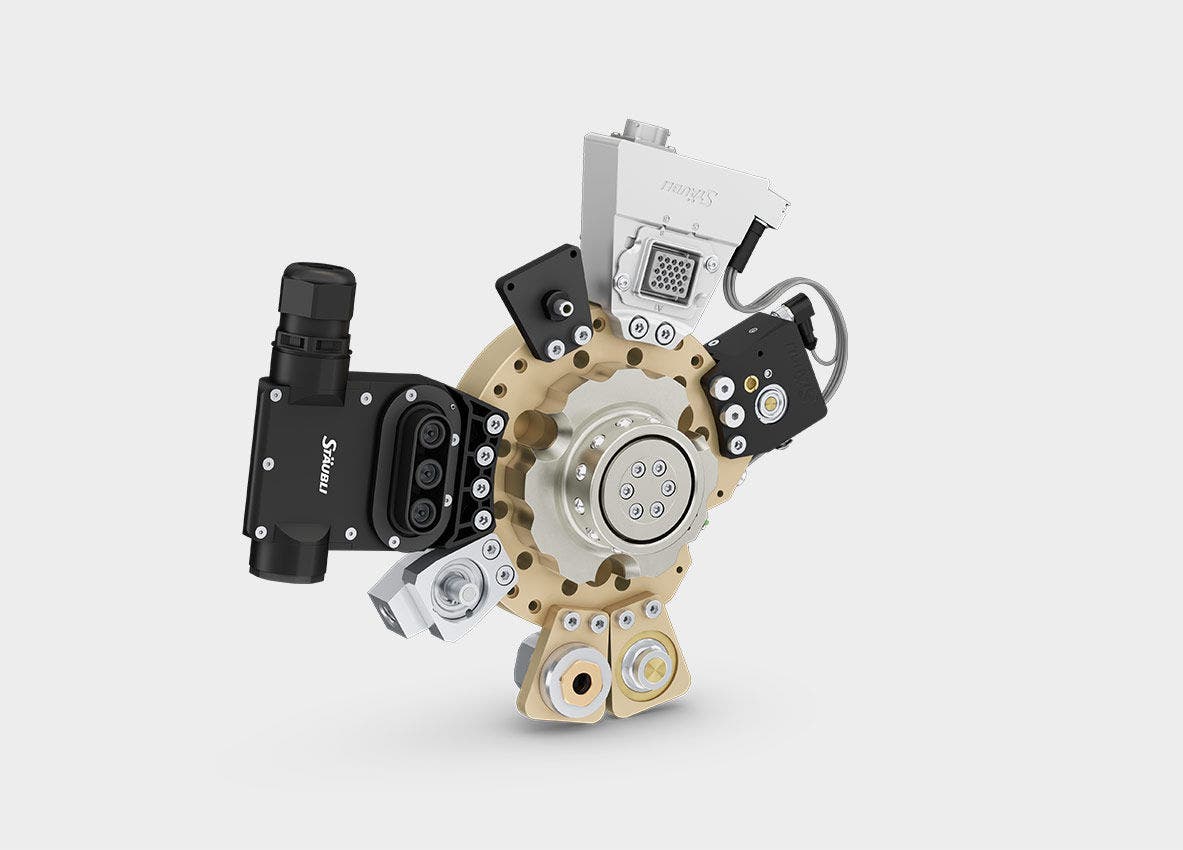
To meet these requirements, Hans Weber Automation implemented an advanced robotic handling system with the Stäubli MPS 631 robotic tool changer at its core.
Integrated image processing reliably detects workpieces, determines optimal gripping points, and transfers geometric parameters directly to the robot. This enables fully teach‑free operation, even with frequently changing batches.
The MPS 631 is designed for high payloads, enabling secure handling of diverse geometries, materials, and weights. Its compact design supports space efficient cell layouts while maintaining maximum flexibility.
A cycle‑time‑neutral flipping concept allows both sides of each workpiece to be machined without interrupting material flow—ensuring stable and predictable throughput.
Sensor technology and camera based detection enable adaptive infeed and return strategies. After processing, workpieces are stacked flexibly, supporting consistent grinding quality and uniform tool wear.
The system processes up to two pallets of sorted workpieces, automatically detecting, flipping, machining, and restacking them—fully autonomously and with high repeatability.
The implemented solution delivers measurable benefits across the entire process:
The result is a reliable, high‑performance automation solution—developed and implemented in close cooperation with Hans Weber Maschinenfabrik GmbH and built on proven Stäubli technology.
kg, maximum workpiece weight handled
The robotic handling system securely manages workpieces weighing up to 150 kg, covering a wide range of industrial parts and ensuring stable, reliable deburring operations.
machined in a single automated flow
Both sides of each workpiece are deburred automatically thanks to a cycle‑time‑neutral flipping concept, without interrupting material flow.
teach-in points required
AI‑based image processing enables fully teach‑free operation, even when workpieces change frequently—dramatically reducing setup effort and operator dependency.
Interested in learning how we supported Eaton in this latest success story? Our teams are ready to help you tackle your safety, performance, and operational challenges and explore how similar solutions can drive results for your business.
Discover more tool changers solutions, which you could use if you wanted to gain the same benefits as Hans Weber Automation did. Solutions adapted to your process, fitting your existing machines, ready to boost your productivity and efficiency.
MPS 055
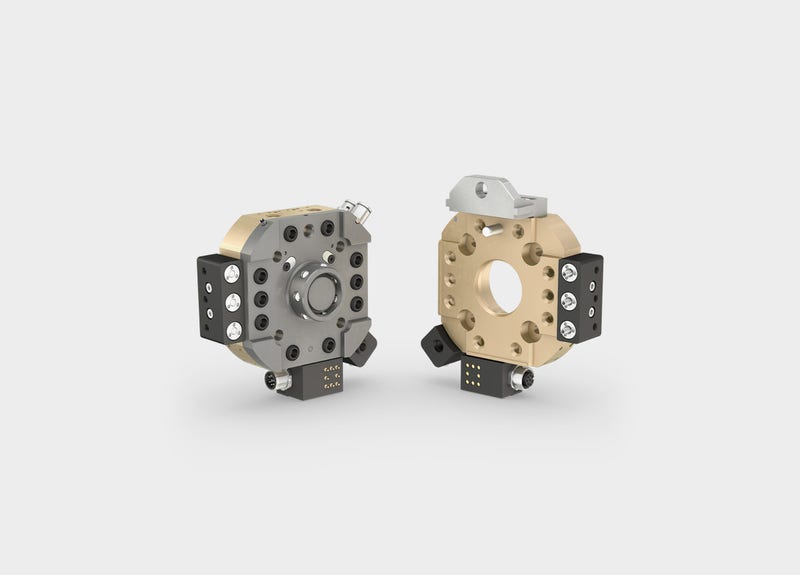
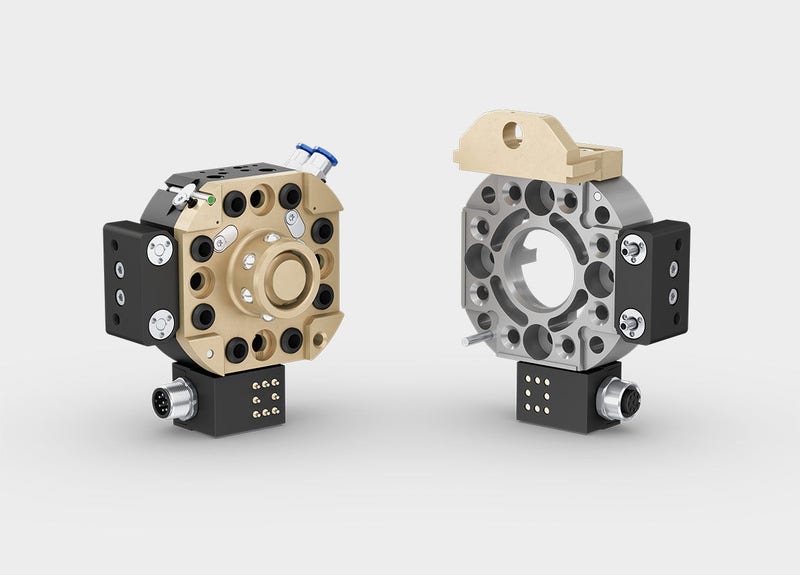
The MPS 055 is a versatile robotic tool change system designed for small payload up to 55 kg applications that also includes transfer modules, a tool stand and a teaching aid.
Robotic tool changer MPS 1531
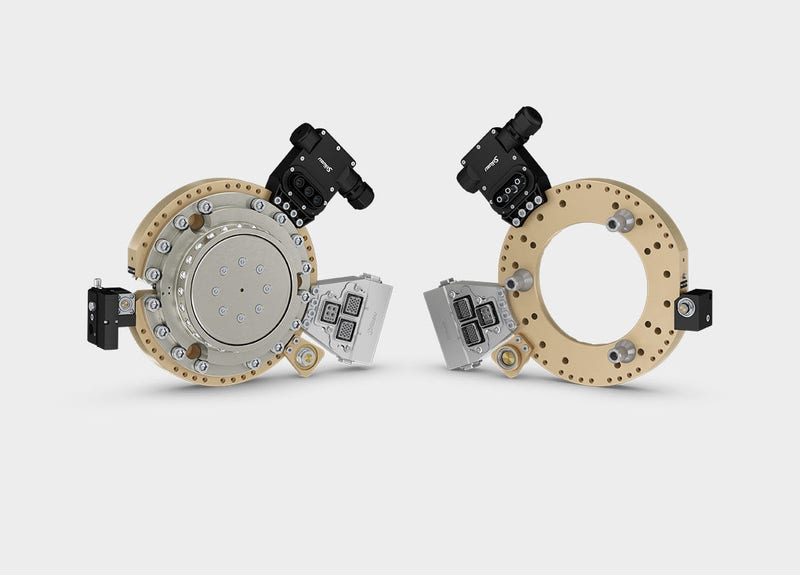
Designed for heavy-duty applications, the Stäubli MPS 1531 robotic tool changer offers a payload of up to 1,530 kg, maximum safety (PL d, Cat. 3) and precise repeatability, as well as a flexible range of modules for media, signal and energy transfer.Interested in learning how we supported our partners in this latest success story? Our teams are ready to help you tackle your safety, performance, and operational challenges and explore how similar solutions can drive results for your business.
Safe and easy‑to‑use
in every process with our MPS solutions
High‑performance
and reliable components developed by Stäubli for robotics applications
Support
for large‑scale deployment of MPS solutions in factories, accelerating the processes
Advanced safety protections
including systems that prevent accidents
Positive user feedback
confirming the reliability and practicality of the system