Regularly, we share a new exclusive insight from the plastics industry—whether it’s an expert perspective, a deep dive into a key technology, or a spotlight on one of our latest innovations. Explore these curated contents to stay ahead of trends, gain practical knowledge, and better understand the solutions shaping tomorrow’s production environments.
PUTTING PEOPLE FIRST
Lee Barnfield
Local Business Head for Plastics & QMC
Do you want your own SMED Analysis?
Faster, easier, safer – that’s the Stäubli philosophy. And it’s grounded in the recognition that behind every process, there’s a person. That’s why for Lee Barnfield, Local Business Head, Plastics and QMC, Stäubli UK & Ireland, real improvement begins with understanding what’s happening on the ground.
Below, Lee shares the challenges operators face today, why ergonomic improvements often go hand-in-hand with efficiency, and how Stäubli helps streamline production without compromising on safety.
It’s a physically tough and mentally demanding job – conditions that contribute to fatigue and errors, and increase the risk of injury.
Some risks are very visible. We're talking about mold tools that can weigh tens of tons. Moving them safely around a facility requires real care; there are pinch points, crush hazards, and high-risk steps during clamping or crane operation. Then there are the factory floor issues: slipping on leaked coolant, tripping over hoses, or burns from hot oil.
It can also feel like injection molding machines weren’t really designed with mold change in mind. Operators are expected to perform complex, repetitive tasks in hot, loud, and often cramped or awkward spaces, sometimes even climbing into the equipment to manually bolt a tool in place.
Beyond the physical demands, there's a mental toll. If something goes wrong—for instance, a leak after reconnecting lines—operators are under intense time pressure to get the machine running again. In some industries, a single hour of downtime can cost tens of thousands of pounds, escalating the stress even further.
We focus on three areas: loading, clamping, and connecting. That’s where operators interact most directly with equipment, and where the risks and delays tend to cluster.
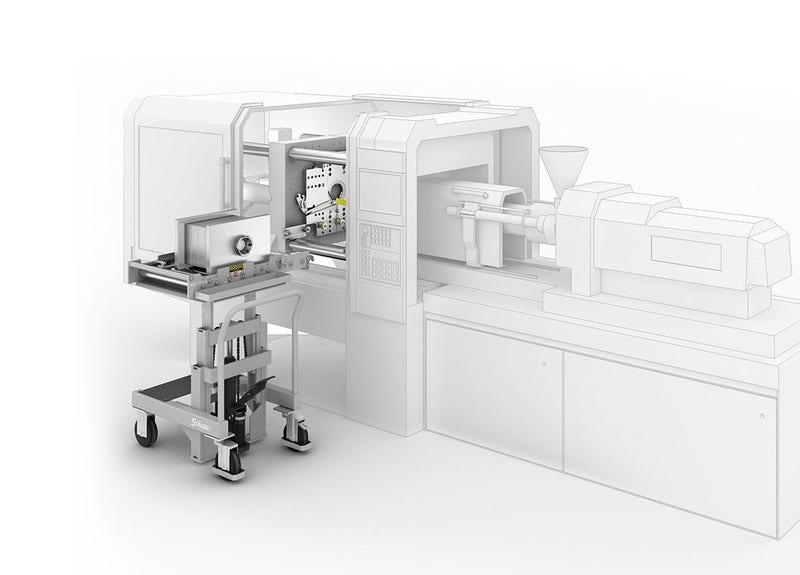
For loading, we offer carts and tables that help move tools to the machine without manual handling. These systems can be fully automated, depending on what the customer needs.
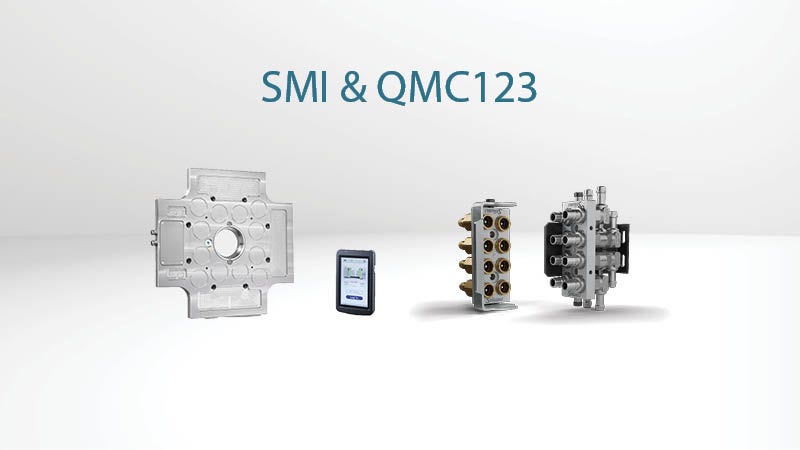
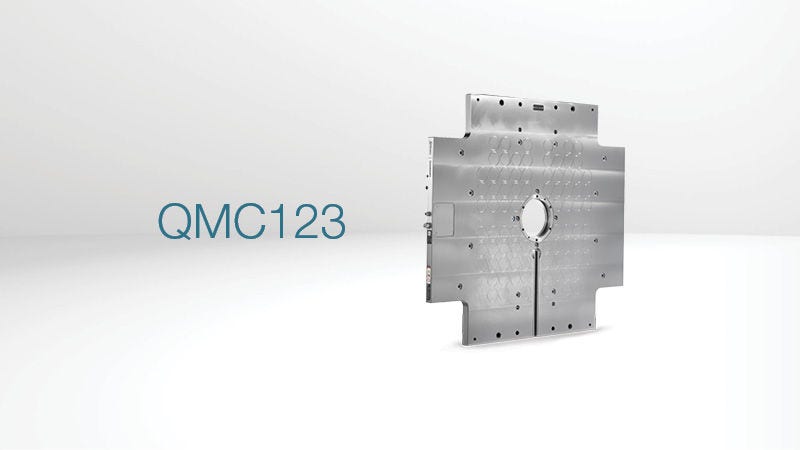
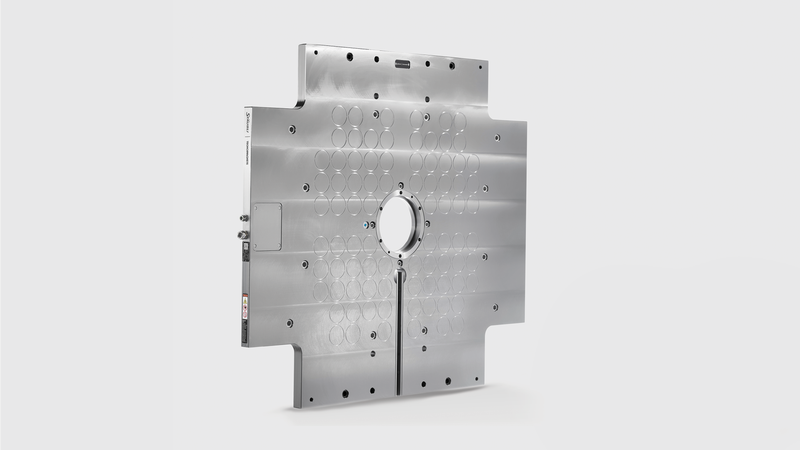
For clamping, we have mechanical, hydraulic and magnetic options. Our QMC123 system, for example, uses magnetic clamping with feedback. That means the machine won’t run unless the mold is properly clamped. It takes away the need for an operator to manually check bolts and ensure everything’s secure.
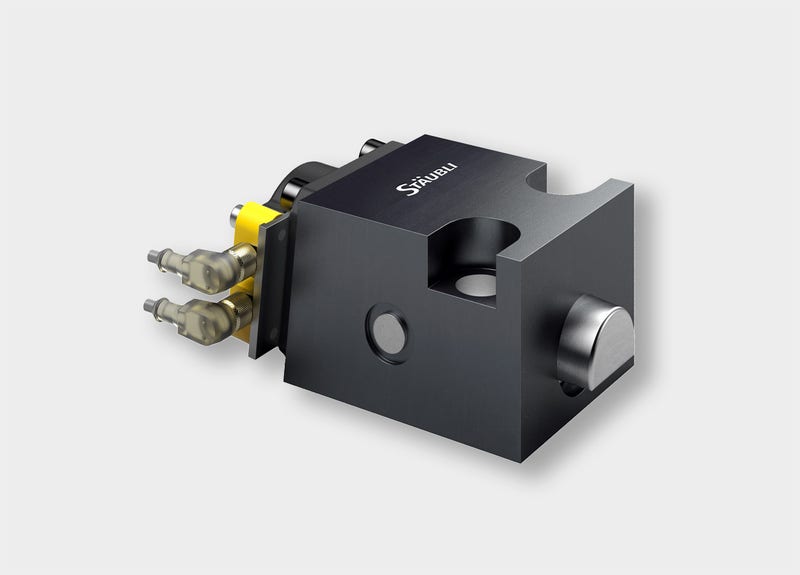
Multi-connection systems are another good example. Traditionally, an operator might have to connect ten or twenty hoses with handwritten notes or color-coded tape as the only guide. If something leaks, they have to redo it – and the machine is down the whole time. We replace that with a single connection block, which is both safer and faster. You also eliminate cross-connections, which can damage equipment or cause injuries and affect performances (longer cycles, defects…).
These upgrades also improve repeatability, ensuring that setup processes are consistent, which in turn supports product quality. When tool changes are standardized, the risk of operator-dependent variation drops dramatically.
Part of it is habit. When we conduct a Single-Minute Exchange of Die (SMED) analysis, we often identify safety risks or inefficiencies that have almost become invisible to the people working with them every day. Another part is the perception that change will be expensive or disruptive. That’s why a key message we share is: you don’t need to overhaul everything to see results.
One of the most valuable things we do during SMED analysis is show people how long things actually take. Customers are often surprised by how much time is lost to small, repetitive tasks. And when we then show how simple changes can recover that time, it reframes the entire discussion.
We usually start with low-cost, high-impact improvements – like upgrading the connection process, standardizing hose lengths or introducing a mold cart. These aren’t massive investments, but they have measurable impact. For example, we worked with a site where connecting cooling lines took 34 minutes. By improving this process, we brought the connection time down to two minutes. By improving how the tools were connected and clamped, we brought it down to two. That gave them back over two weeks of production time per year, and the system paid for itself in under three months.
I think the biggest challenge is still mindset. Too many processes are still designed around the machine, not the human. I mentioned injection molding machines earlier, for example. They were built to be robust and precise, but not necessarily accessible or ergonomic. That leaves operators climbing over tie bars or leaning into cramped spaces with spanners, sometimes in unsafe positions.
These kinds of conditions aren’t the result of negligence. They come from legacy systems where speed and output were the focus, and people were expected to adapt. Our job is to change that thinking: show what’s possible, and help teams prioritize practical changes that improve both efficiency and safety.
Sometimes that means starting small. But over time, the most effective improvements are the ones that eliminate the potential for error altogether by removing manual steps or building in safeguards. If you can do that, you’re no longer relying on perfect execution under pressure. Instead, you get a process that’s more consistent, controlled, and easier to manage.
Start by looking closely at what’s really happening during changeovers – not just how long they take, but how consistent they are and where operators are struggling. Then ask questions: Why is that hose a different length? Why do they need a ladder? Why are there handwritten notes next to a high-pressure connection? If the answer is, “We’ve always done it this way,” then there’s likely room for improvement.
That’s where a structured approach, like SMED, can help. At Stäubli, we combine that analysis with expertise in loading, clamping, and connection – the areas where risk and variability tend to creep in. With the right changes in the right places, manufacturers can improve safety, reduce downtime, and achieve more consistent results, often without needing to redesign the entire process.
These kinds of conditions aren’t the result of negligence. They come from legacy systems where speed and output were the focus, and people were expected to adapt. Our job is to change that thinking: show what’s possible, and help teams prioritize practical changes that improve both efficiency and safety.
Sometimes that means starting small. But over time, the most effective improvements are the ones that eliminate the potential for error altogether by removing manual steps or building in safeguards. If you can do that, you’re no longer relying on perfect execution under pressure. Instead, you get a process that’s more consistent, controlled, and easier to manage.
Discover the key benefits of Stäubli's decades of experience in the plastics industry. Safety for every operator, work made accessible and easy with our connection solutions. Reliability in every operation and for every plastics applications.
Contact our team for your own SMED Analysis in order to reduce your downtime.
Optimize your productivity and unlock faster, safer mold changeovers with Stäubli’s comprehensive Quick Mold Change (QMC) portfolio. Engineered for precision, reliability, and repeatability, our solutions support seamless integration into any injection molding environment.
Explore the full range of QMC technologies below and find the ideal combination to boost efficiency, improve uptime, and elevate the performance of your production line.
Hydraulic clamping
Compact and robust: hydraulic clamping system for automated tool change under harsh operating conditions.
Mechanical clamping
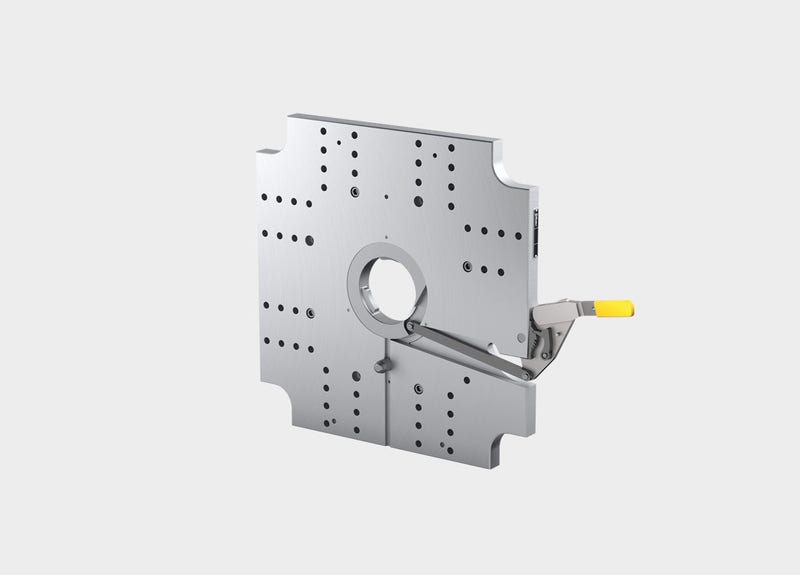
Simple and safe: mechanical bayonet clamping system for safe tool clamping in one easy movement.
Magnetic clamping
Safe, innovative and fast: the magnetic technology is simple and requires no work on the mold. An ideal choice for frequent changes.
Mold loading vehicle
Flexible solution for mold change and transport.Looking for guidance on our hydrogen transfer and refueling solutions? Whether you’re designing a station, developing a vehicle platform, or managing a hydrogen infrastructure project, our teams are ready to support you.