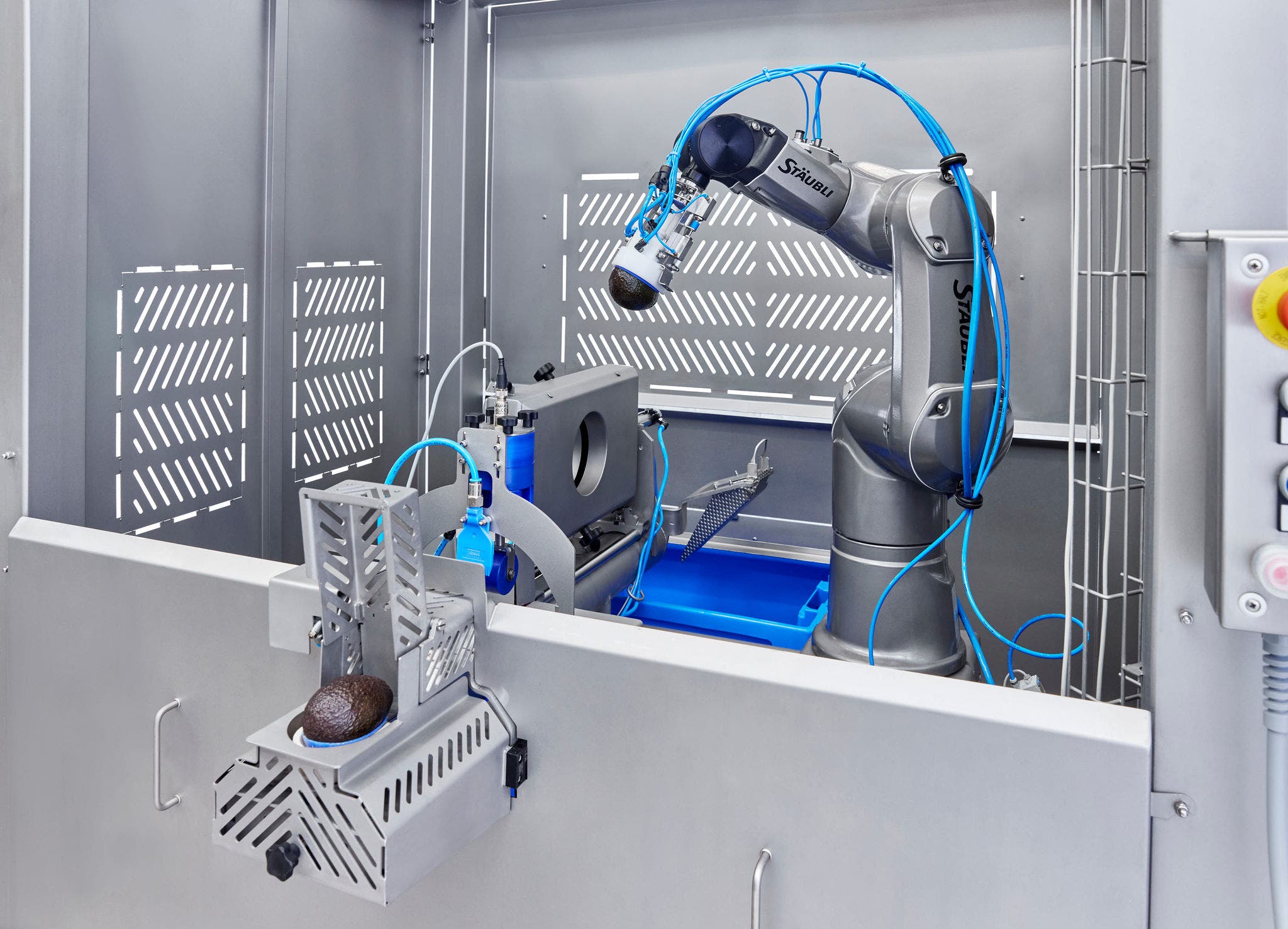
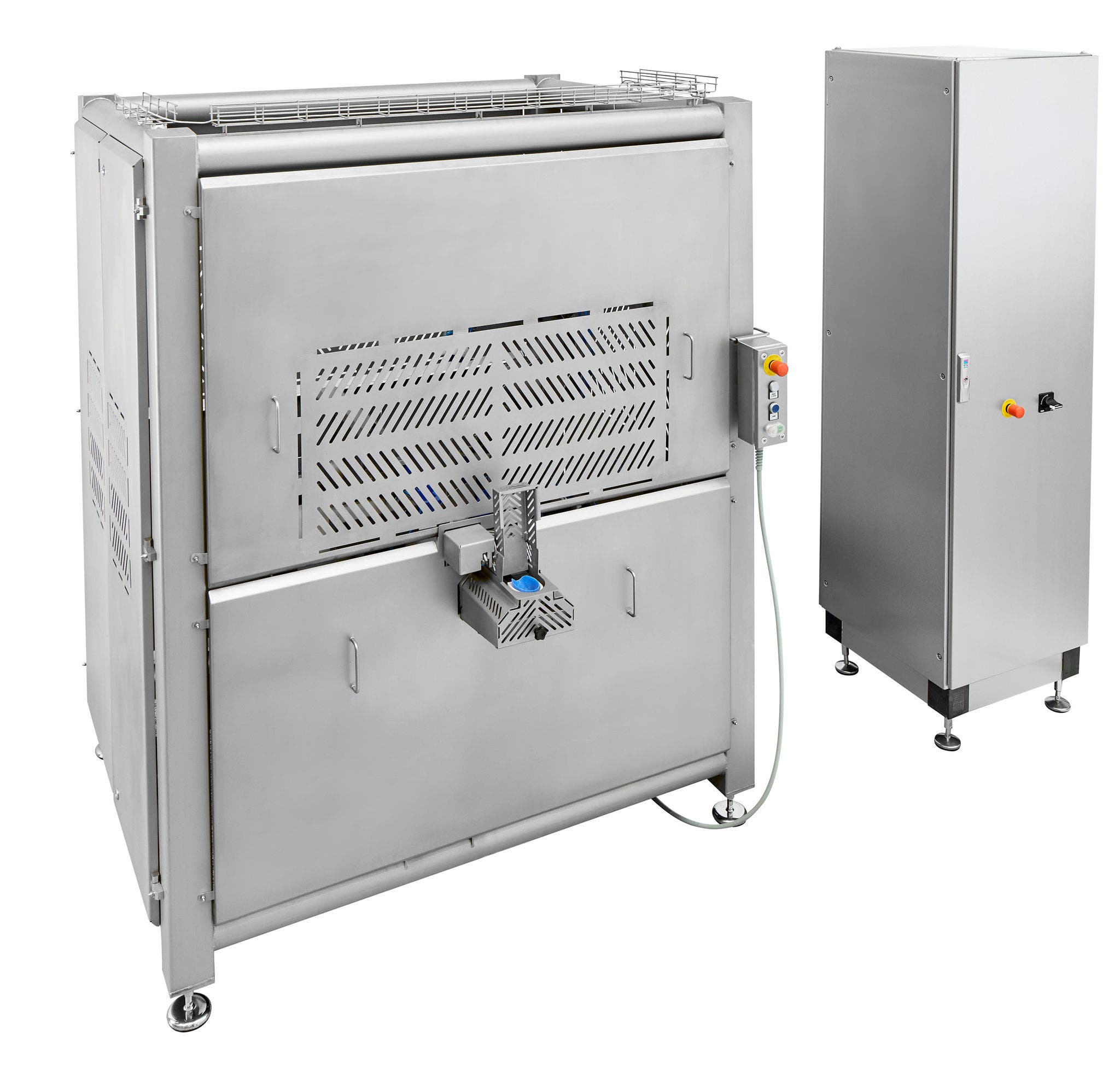
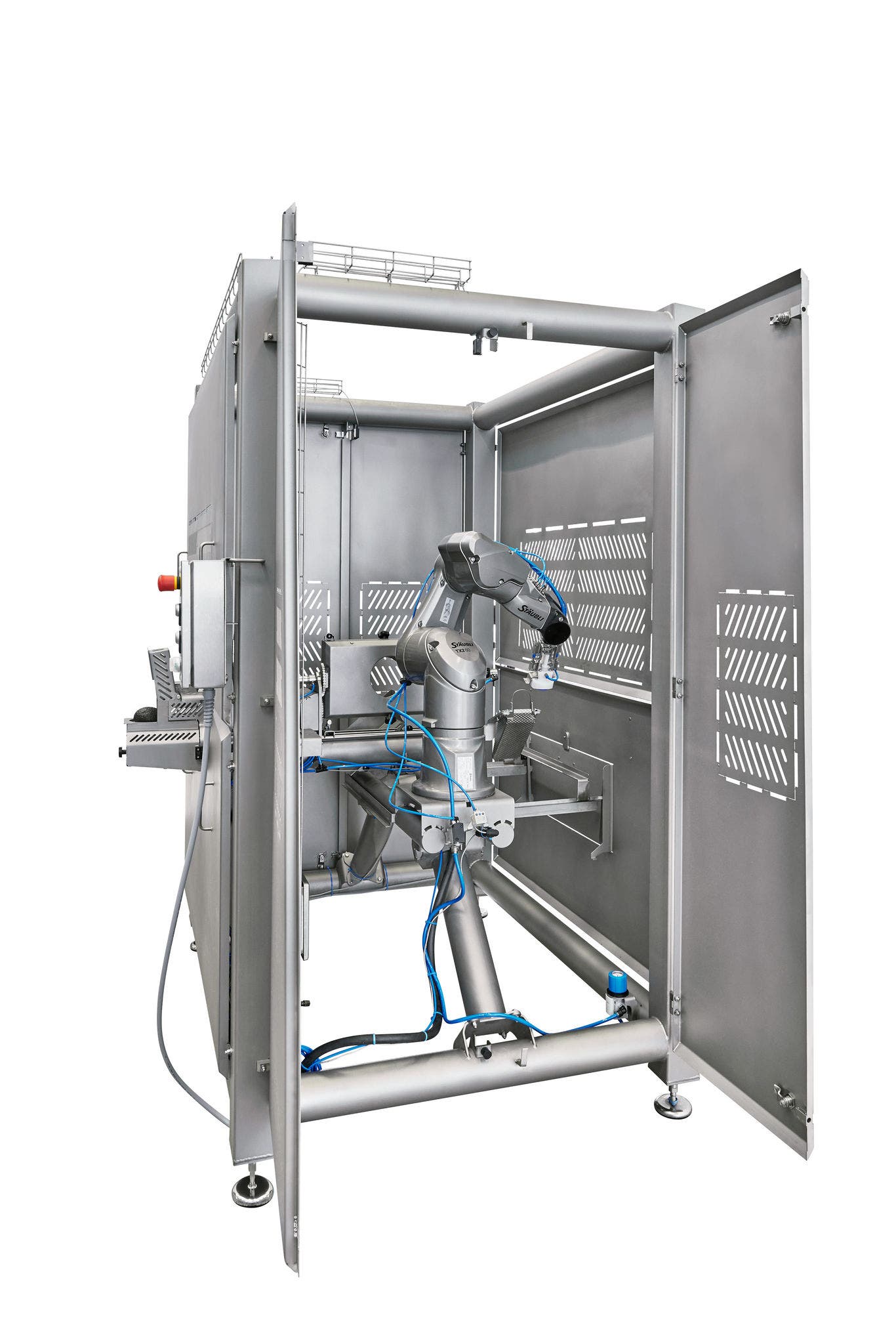
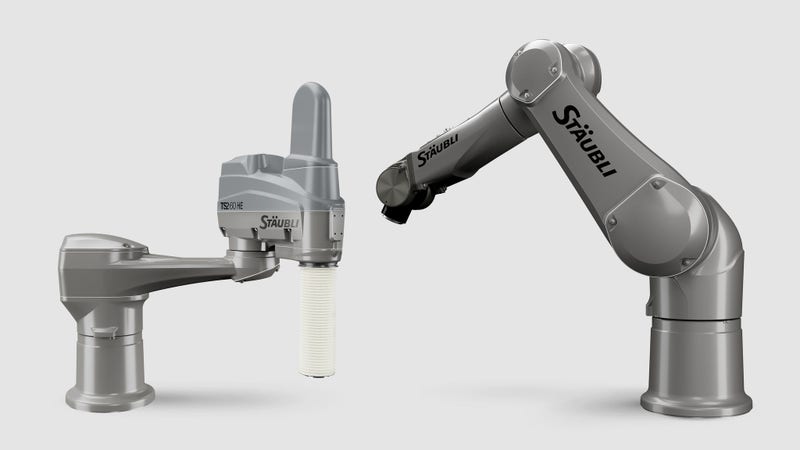
Can the peeling and pitting of delicate avocados be automated? The task is challenging, but fully achievable, as demonstrated by an innovative robotic cell. A hygienic six-axis Stäubli robot handles the fruit with both care and precision.
Fully automating the pitting and peeling of avocados represents a major advantage for food processors. This objective led Kronen GmbH, based in Kehl am Rhein, to develop and build a robotic solution capable of handling this complex task.
Avocados are widely used in salads, bowls, dips and guacamole, and the large volumes involved make automation highly relevant. Manual peeling and scooping also require repeated twisting motions, which can lead to joint strain over time.
Kronen, a global specialist in food processing equipment for fruits, vegetables and salads, addressed this challenge by developing a patented peeling wire system. The operator moves the halved avocado linearly across the wire, separating peel and flesh efficiently without any twisting motion.
This principle was later expanded to include the pitting process, where the fruit is cut in half including the pit.
Kronen has now fully automated the process with a compact robotic cell for pitting and peeling avocados.
An operator places each fruit into a holder, which is then conveyed to a measuring station. This station provides the Stäubli TX2-60 HE robot with the data required for precise and gentle handling.
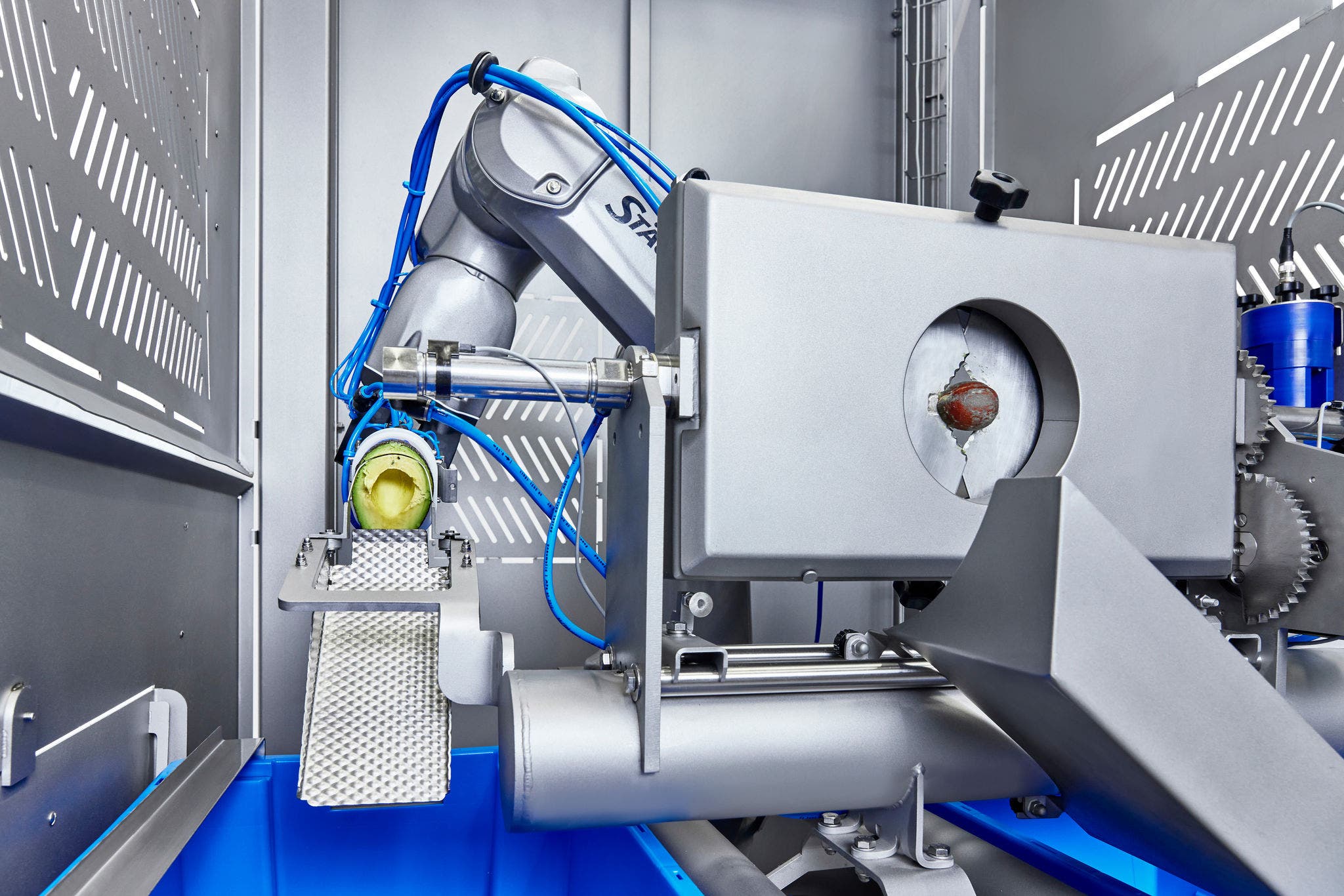
Using a specially designed vacuum gripper, the hygienic robot picks up the whole fruit and places it into the pitting station. Two blades move towards each other, cutting the fruit and holding it firmly at the pit.
The robot then separates one half from the pit through a controlled rotation. This half is guided along the peeling wire, following a path defined by the measurement data. The flesh is collected, while the peel is discarded.
The station then rotates by 180 degrees, allowing the robot to repeat the same process for the second half. The remaining pit is ejected and the cycle is complete.
This setup enables a processing rate of around 400 avocados per hour.
The Stäubli TX2-60 HE provides the speed and precision required to follow the exact contour of each avocado during peeling. Unlike standard robots, it is designed to withstand intensive washdown procedures typical of food processing environments.
Following the presentation of the first prototype, strong interest emerged from companies worldwide involved in avocado processing.
This interest is driven by several factors:
Based on user data, the system achieves payback in just over one year.
The concept is also scalable: the cell can be extended with one or two additional robots, increasing capacity up to 1,000 avocados per hour.