SUCCESS STORY

Non-ferrous metal recycling 4.0 – with 18 robots in a high-speed sorting line

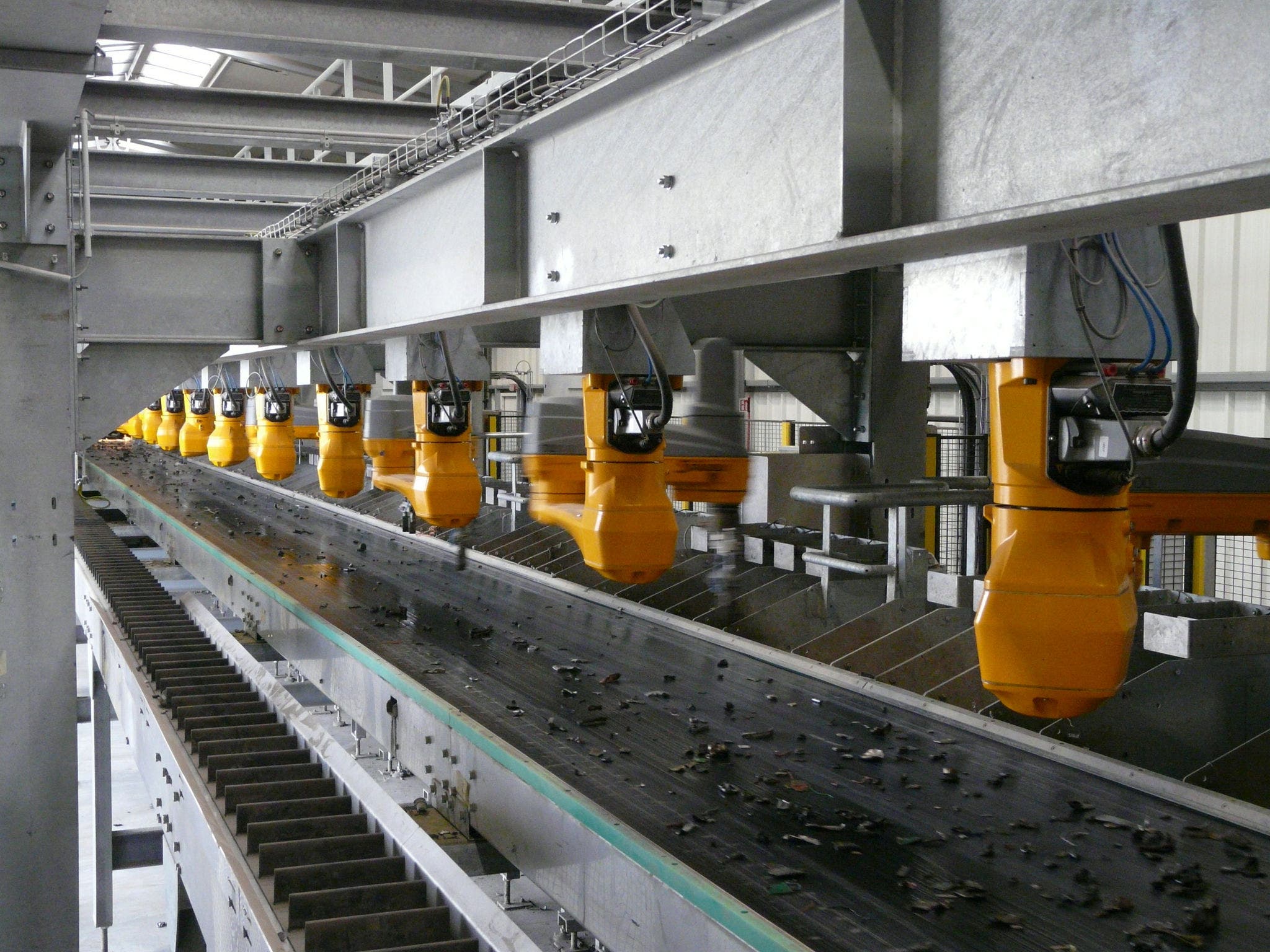
A unique achievement in European car recycling: a shredder that processes 300 tons of car bodies every hour. And a fully automated sorting line with 18 Stäubli SCARA robots that sorts 90,000 valuable metal fractions into five streams per hour.

CUSTOMER BENEFITS

  • Groundbreaking concept for the circular economy
  • Fully automatic sorting of non-ferrous metals
  • Recovery of valuable metal fractions
  • High throughput
  • Robust automation

TASK

Fully automatic sorting of non-ferrous fractions from shredded car bodies

The largest car shredder in Europe, Comet Traitement in Obourg, Belgium, processes 300 tons of car bodies per hour. On the same site is Europe's most innovative plant for non-ferrous metal sorting: the fully automated “Megapicker” line, where 18 Stäubli SCARA robots separate the most valuable non-ferrous fractions from the shredded material stream.

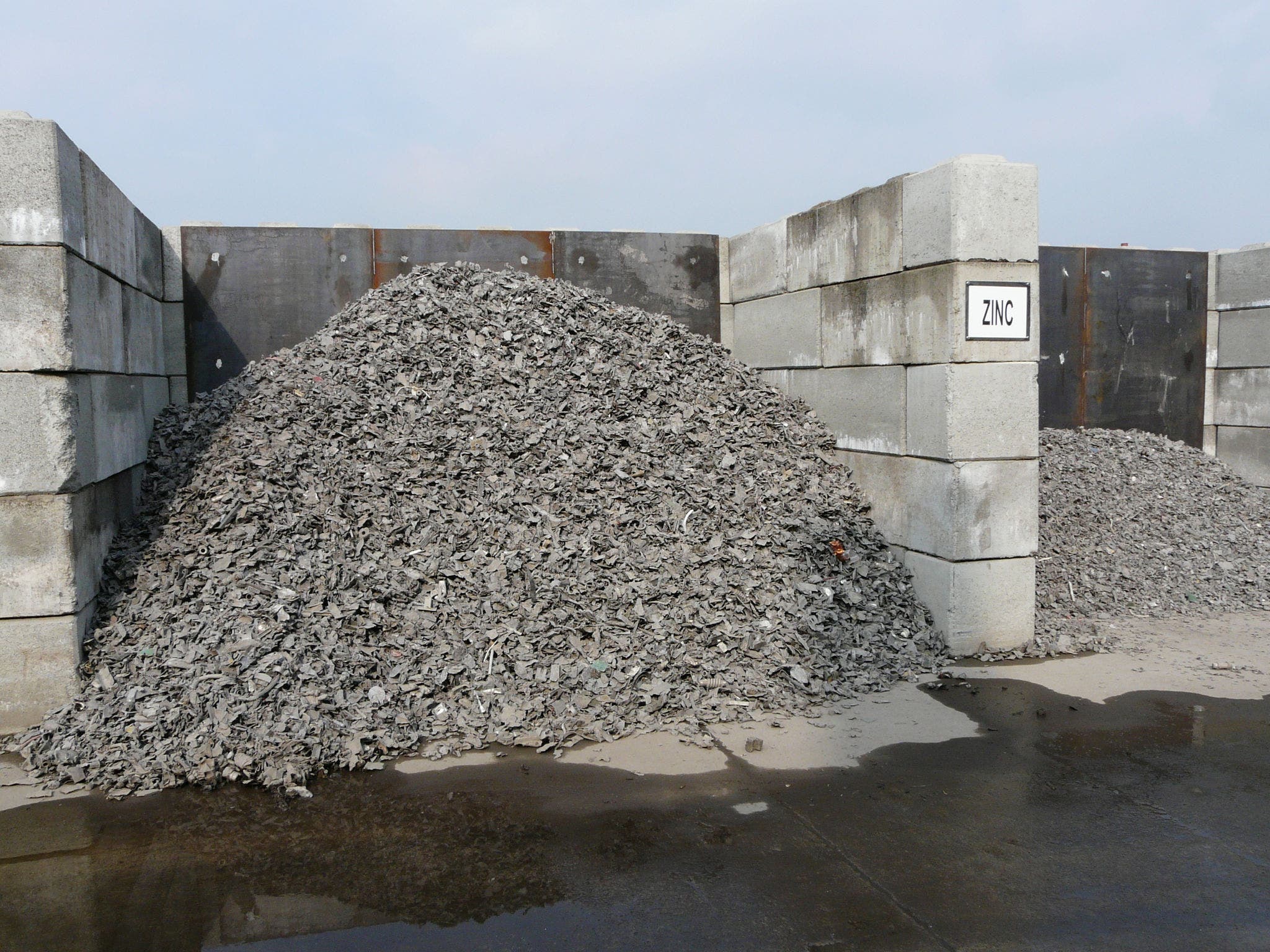
Once most of a car body has been dismantled, shredded, and separated into its main material fractions, such as steel and plastics, the valuable non-ferrous metals remain: aluminum, zinc, copper, brass, and stainless steel. Until now, these fractions have been exported in unsorted form, mostly to Asia, where they are sorted manually and melted down. This practice is not environmentally friendly, and takes the materials out of the European recycling loop.

Today, things are different. The world-first Megapicker uses 18 robots in a single line to sort shredded non-ferrous metals fully automatically, so they can be reused in pure form.

SOLUTION

High-speed sensors, a conveyor belt, and 18 SCARA robots

The solution was developed by Belgian integrator Cylix. The result is a smart sorting system that combines different sensor technologies for fast detection and high throughput. The combined sensor data determines the material of each part and its sorting path.

At the same time, the Cylix engineers tackled a second, equally complex task: How can 1,500 irregularly shaped metal parts per minute (90,000 per hour) weighing between 20 g and 1 kg and measuring between 20 and 100 mm be gripped and sorted?

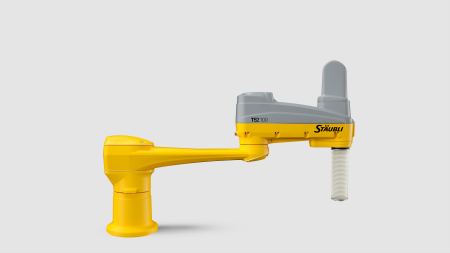
The answer: Take a 50-meter central belt conveyor running at 1 m/s, install 18 Stäubli TS2-100 SCARA robots, and control them according to the principle of division of labor so each robot is fully utilized in 24/7 operation. Thanks to AI-supported continuous optimization, only minimal amounts of material remain unidentified or unsorted at the end of the line.

Every minute, the 18 robots grasp and sort around 1,500 differently shaped parts in perfect coordination. Remarkably, they do so without cameras or sensors:  The control system sends them the x/y/z data and the exact angle for gripping each part.

CUSTOMER USAGE

A robust solution with Stäubli SCARA robots

Stäubli's SCARA robots have thus opened up a new field of application that demonstrates their precision and robust construction in continuous 24/7 operation. The Comet team is very satisfied. “We expect an ROI within five years. And the industry can now use valuable secondary metal—without downcycling, and within Europe,” says R&D Officer Grégory Lewis.

LEARN MORE ABOUT OUR PRODUCTS